Founder

A product thinker.
A doctrine-first platform.
A new engineering model.

This is the story of how RADZ GeoForesight came to life: the insight that motivated it, the principles that govern it, and how AI became the engineering team that built it. In development since November 2025.

NS
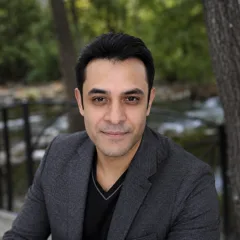
Neeraj Sood
Founder, RADZ GeoForesight AI
LinkedIn
The insight

The gap that insiders had learned to live with.

I am a product and systems thinker. I approach problems domain-agnostically: I look for where a synthesis layer is missing, where data and processes exist but the right answer still isn't surfacing clearly enough to act on. That lens has worked across industries, across domains, across the twenty years I have spent building things.

The subsea cable gap was visible precisely because I was looking at it fresh.

Almost all of the world's information moves across this invisible infrastructure on the ocean floor. Roughly $10 trillion in daily financial flows. Cables that NATO and the EU have classified as critical national security infrastructure. And the operators responsible for them are still resolving risk across five disconnected tools, with no synthesis and no clear answer to the question that actually matters: for my portfolio, right now, what is the posture, what is driving it, how much is exposed, and what do I do?

Domain insiders often adapt to a broken process because they have always worked around it. A product thinker sees it clearly the first time. That is what happened here, and it is what RADZ GeoForesight was built to fix.

The doctrine

The hard part is not the code. It is knowing what to say and what to refuse.

My co-founder, my wife, and I combined what we have each spent careers building: product thinking, risk frameworks, governance design, operational discipline. Before any model was trained or any API wired, we defined a doctrine.

A doctrine is a set of explicit principles for how the system should think, behave, and evolve. What counts as a signal and what is noise. What the platform is permitted to assert and what it must refuse to assert when the data does not support it. How to be honest about uncertainty without rendering the output useless. How posture should be set, what can override it, and why.

That doctrine is not a design artifact. It is the intellectual core of the product. It is what makes RADZ GeoForesight auditable, reproducible, and defensible in front of a model-risk reviewer, a regulator, or a board.

The build produced a substantial governance corpus alongside the platform itself: posture doctrine, scoring conformance programs, data source contracts, guardrails, audit trails, calibration reports, and change control policies. That documentation exists because the system was designed to be interrogated, not just used.

01
Doctrine
Explicit principles for what the system can and cannot claim
02
Architecture
Doctrine turned into data contracts and scoring structure
03
Engine
Architecture turned into a deterministic, replayable scoring system
04
Platform
Engine wrapped in an operator-facing product with full provenance
The engineering model

Three AI tools, working in sync. What typically takes years and millions of dollars, compressed.

Building an enterprise risk intelligence platform normally requires a team: engineers to write the code, analysts to validate the models, researchers to map the domain, product managers to hold the scope, and a QA function to catch what the others miss. That is years of work and millions of dollars before you have anything a pilot user can evaluate.

RADZ GeoForesight was built differently. I acted as product, architect, and domain expert simultaneously. Three AI tools operated in sync under the same written doctrine and governance framework, each assigned to a distinct function. The doctrine did not just guide the output. It governed every AI interaction from day one. That discipline is what prevented the build from producing noise at speed instead of signal.

This is not about moving fast. It is about a new architecture for how complex software gets built: one where the human provides the doctrine, the judgment, and the final authority on correctness, and AI handles execution at every layer beneath it. Quality was not traded away. It was enforced, because nothing shipped that had not been specified, challenged, and reviewed against the doctrine first.

The human layer
Product
What to build and why. What the platform must do for an operator to trust it in a real risk decision.
Architect
How every layer connects. Data contracts, scoring structure, API contracts, the doctrine floors that override raw scores by design.
Domain translator
What the system is permitted to claim and what it must refuse. The judgment that only a human with context can make.
ChatGPT
The builder

Every schema, every API endpoint, every ingestion pipeline, every scoring module. The doctrine specified what was needed; ChatGPT translated those specifications into working software, iterated on it, and held the implementation together as complexity compounded across months of build.

Grok
The analyst

The adversarial voice in the build. When risk logic needed stress-testing, when a geopolitical assumption needed a challenge, when a model output needed a second opinion that would push back rather than confirm: Grok was the analytical pressure the system had to survive before anything moved forward.

Claude
UI, Research, Quality

Product surface, domain research, and the quality bar. Mapped cable incidents, maritime law, geopolitical frameworks, and operator workflows. Shaped Ask RADZ and the explainability layer. And held consistency across the full platform: logic, language, and whether the output would survive scrutiny from a quant or a risk committee.

Three frontier AI tools, one human architect, one written doctrine governing all of them. This is a genuine case study in what AI-assisted enterprise product development can produce when the process is disciplined: a platform where every layer was specified, built, challenged, and quality-checked before it shipped. The doctrine was the operating system for all three tools. That is why the output is auditable. The rigor was structural, not incidental.

The result

A demo-ready engine. A patent-pending methodology. Now in design-partner conversations.

RADZ GeoForesight is a working engine: a deterministic, replayable risk scoring system that fuses vessel, geopolitical, hazard, and structural signals into a single explainable posture for a cable operator's specific portfolio. Real licensed sources. Real signal governance. Full provenance from source to posture. An AI analyst layer that cites its reasoning and refuses what the data cannot support.

The methodology is patent pending. The platform has been replayed against real corridor incidents, including the Red Sea severances, the Baltic hybrid events, and the Tonga volcanic rupture, and the characterizations hold.

We are now opening a small number of design-partner conversations with operators, risk-analytics teams, and resilience leaders who want to pressure-test the models against the corridors they know best. The goal is not to prove the platform in a demo. It is to validate it under the conditions that actually matter.

4
risk vectors fused into one explainable posture
12+
real licensed and public signal sources, each governed
5
doctrine floors that can override the raw score by design
What is next

Pressure-test it against the corridors you know best.

We are opening a small number of design-partner conversations with operators, risk-analytics teams, and resilience leaders. No pitch deck. A methodology walkthrough, scenario replays, and an honest conversation about where the real analytical gaps still are.